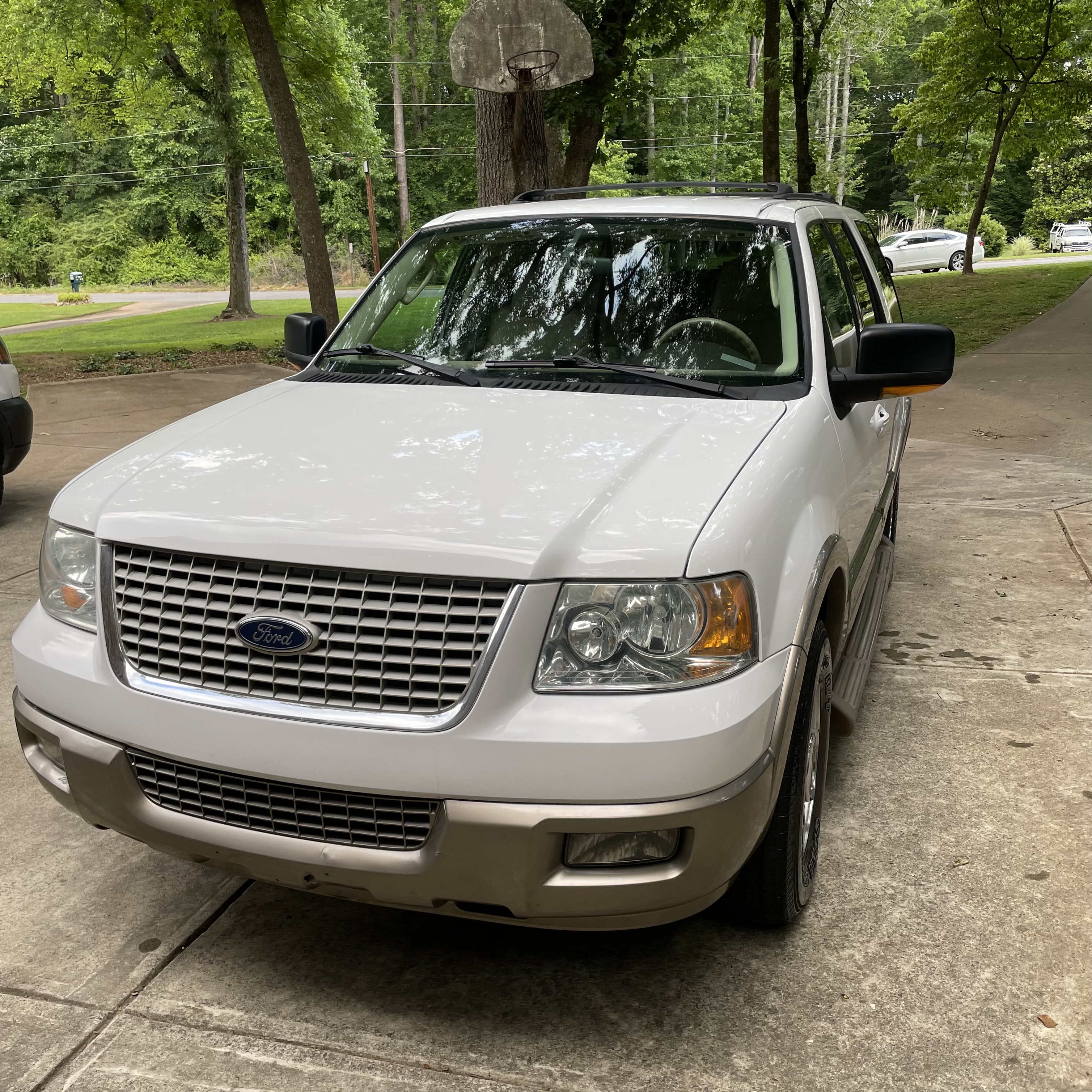
Ford introduced this full-size SUV in the mid-1990s as a larger, more family-oriented alternative to the Bronco and a strong competitor in the emerging full-size SUV market. Although Ford has referred to the nameplate’s debut as 1996, the first model year was 1997, when the vehicle first reached buyers. It quickly established itself as Ford’s flagship utility vehicle and a defining nameplate in the brand’s SUV lineup. Over time, it has remained in continuous production rather than disappearing and returning, so it is best understood as a single long-running model history.
Across its life, the nameplate has moved through several distinct eras. The original generation was closely tied to Ford truck hardware and set the template: large-scale family utility, strong towing focus, and conventional body-on-frame capability. A major redesign in 2003 brought a more refined road-going character, including the switch to independent rear suspension, which became an important step in improving ride comfort and everyday usability. The next generation, launched for 2007, continued the march toward more technology and comfort while preserving its full-size SUV mission.
In recent years, Ford has continued to evolve the nameplate with major updates and an all-new 2025 redesign, underscoring that it remains a current, actively developed vehicle rather than a legacy badge. For enthusiasts, it stands out as one of the most influential modern American full-size SUVs: a model that helped shape the segment Ford helped popularize, and one that has stayed relevant by balancing traditional truck-based toughness with increasing refinement and family-friendly versatility.